

Previous Speakers
Public Health, Eugenics, and Other Funny Words in the AI era
Claudio Battiloro, Harvard University
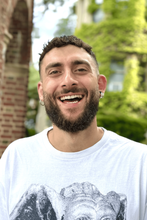
Dr. Battiloro is a Research Associate at the Harvard T.H. Chan School of Public Health in the NSAPH group supervised by Prof. Francesca Dominici. He is part of the Harvard Data Science Initiative. He is a former Visiting Associate at the University of Pennsylvania School of Engineering and Applied Science in the AleLab group supervised by Prof. Alejandro Ribeiro. He received a M.Sc. cum laude (and recognized as a top 1.5% student) in Data Science and a Ph.D. cum laude in Information and Communication Technologies, both from Sapienza University of Rome, and both under the supervision of Prof. Paolo Di Lorenzo. Claudio’s research interests include theory and methods for topological signal processing and deep learning, AI for healthy climate adaptation, and distributed stochastic optimization. He has over 40 publications, including papers published in top-tier journals (e.g., IEEE Transactions on Signal Processing, Journal of Machine Learning Research, IEEE Transactions on IoT, and IEEE Transactions on Green Communications and Networking) and conferences (e.g., ICLR, ICML, ICASSP, NeurIPS, and IJCNN). Claudio received different awards, such as the IEEE SPS Italian Chapter Best M.Sc. Thesis Award (2020), the GTTI Best Ph.D. Thesis Award (2024), and the "Elio Di Claudio" Best Ph.D. Thesis Award (2025).
A New Direction for Students in An AI World: Prosper, Prepare, Protect
Rebecca Winthrop, Senior Fellow and Co-Director, Center for Universal Education, The Brookings Institution and lead of the Brookings Global Task Force on AI in Education.
Watch the Recording. | Read the full report from the Brookings Institute

Rebecca Winthrop is a leading global authority on education, the director of the Center for Universal Education at Brookings and an adjunct professor at Georgetown University. She is dedicated to ensuring that every child has the opportunity to thrive in life, work, and as an engaged citizen. She leads cutting-edge research and initiatives aimed at transforming education systems around the world to better support children's learning and development.
Rebecca is a trusted advisor to both school communities and national and international organizations. Her expertise is sought by many including parent networks, schools, district education leaders, the White House, the United Nations, and Fortune 500 companies. Rebecca's work is centered on developing and advocating for evidence-based strategies that bring people together—families, educators, policymakers, and companies—to help children maximize their potential.
She holds a PhD from Columbia University’s Teachers College, an MA from its School of International and Public Affairs, and a BA from Swarthmore College.
Care Policy for Older Adults in Germany, the EU, and the WHO, with Reflections on U.S. Developments
Matthias von Schwanenflügel, LL.M.Eur, Professor, University of Bremen (Germany) Fellow, Institute for European Health and Social Economy
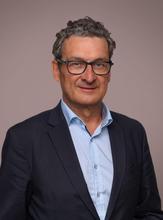
Professor Dr Matthias von Schwanenflügel is a lawyer. After working as a research assistant at the University of Bremen and in the European Commission's Directorate-General for the Environment, he joined the Federal Ministry of Health from 1991 to 2014, including as Head of the Directorate for Long-Term Care Insurance. From 2014 to 2022, he led the Directorate-General for Demographic Change, Elderly and Welfare at the Federal Ministry for Education, Family Affairs, Senior Citizens, Women and Youth. He has been a professor at the University of Bremen since 2018 and a fellow at the Institute for European Health and Social Economy in Berlin since 2023.
A coordinated and comprehensive approach to impact obesity: addressing causes and contributors.
Leah Whigham, PhD, Professor, Department of Nutritional Sciences, The University of Texas at Austin
Watch the ZOOM recording. Password: *b0&fW2C
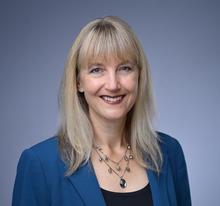
Leah Whigham, PhD, FTOS, is an obesity scientist and Professor in the Department of Nutritional Sciences at The University of Texas at Austin. Prior to coming to UT, she was the founding director of the Paso del Norte Institute for Healthy Living, the Center for Community Health Impact, and the El Paso Nutrition & Healthy Weight Clinic. Prior to that, she was a Lead Scientist and Research Nutritionist at the USDA Human Nutrition Research Center in Grand Forks, North Dakota. Dr. Whigham has over 25 years of experience in basic, clinical, and translational sciences. Her research has increased our understanding of metabolism as it relates to obesity, the influence of nutrients and immune function on body composition, the impact of the environment on health, the development of software tools for healthcare providers, the use economic development strategies to increase access to healthy food, and the use of multi-sector system models to drive change at a population level. Dr. Whigham is a Fellow of The Obesity Society (FTOS) and served on the Executive Committee as Secretary/Treasurer along with numerous other leadership roles. She also serves as Editor-in-Chief of Nutrition & Diabetes, a Springer Nature Journal.
AI in Clinical and Community Health: Considerations for harnessing data at the frontline of care
Abdul Rehman, Global Leader for Population Health for Amazon Web Services
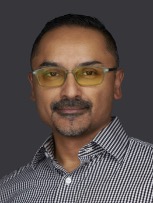
Dr. Abdul Rehman Shaikh is Global Leader for Population Health at Amazon Web Services (AWS). He helps healthcare providers, payors, governments and nonprofits harness data for clinical and population health using advanced analytics such as machine learning, predictive modeling, and generative AI. Prior to AWS, he led large-scale healthcare transformation initiatives at PwC and Guidehouse, and was a Program Officer at the National Institutes of Health (NIH) and ONC, shaping federal efforts to modernize health data infrastructure. Dr. Shaikh’s professional activities include serving on several nonprofit boards and advisories including the HIMSS SDOH Task Force, ASPPH Task Force for Responsible/Ethical Use of AI, and the National Academy of Medicine’s Digital Health Action Collaborative. His work has been featured in Becker’s Hospital Review, Wired, and The Wall Street Journal, and he is a regular speaker on AI, cloud computing, and the future of healthcare. Dr. Shaikh holds graduate degrees in public health and health services research from the University of Toronto and the University of Michigan, and completed his postdoctoral training as a Cancer Prevention Fellow at the NIH.