
Vision
Creating a healthier tomorrow for all, prioritizing prevention today.
Mission
Building healthier futures through interprofessional education, innovative research, and dynamic partnerships.
Values
Compassion Excellence Growth Mindset Integrity Respect
George Mason Grand Challenge Initiative
George Mason’s students, faculty, staff, and partners will push the boundaries of progress to solve the greatest threats to humanity’s ability to live a peaceful, healthy, prosperous, and just existence. One grand challenge. Six grand solutions. College of Public Health students, faculty, and staff will will play a vital role in the solutions, with special emphasis on “improving human health, well-being, and preparedness.”

Click to read about
From the Dean
Every now and then, a year comes along that changes everything. For the College of Public Health, this has been one of those years—a year of breakthroughs, growth, and profound impact. Together, we are redefining what it means to lead public health in Virginia and beyond.
One of our proudest milestones was earning full accreditation from the Council on Education for Public Health (CEPH), making us the first and only CEPH-accredited college of public health in the Commonwealth of Virginia. This historic recognition affirms our commitment to excellence, innovation, and health equity for all. It reflects who we are—and the future we are building together. Additionally, George Mason was one of only 21 R1 institutions in the country to be recognized as a high access—high earnings university by the American Council on Education and the Carnegie Foundation for the Advancement of Teaching.
Our faculty and students are driving real change, advancing research in intimate partner violence, forever chemicals, mental health, and the public health workforce. They’re doing this work where it matters most: in communities, clinics, schools, and homes. Through community-based research, hands-on internships with leading health organizations, and scholarships that open doors, we are equipping students to lead in an evolving health landscape.
I know how life-changing these opportunities can be. As a former Pell Grant recipient, I remember what it felt like to wonder whether I could afford to stay in school. I am grateful for those who believed in me and my potential. I see myself in so many of our students, and I am deeply committed to ensuring they have the support, mentorship, and resources they need to thrive. Their success is our mission—and our legacy.
This year, I continued learning, too. I completed my MBA at George Mason’s Costello College of Business, returning to the classroom to grow as a public health leader. Balancing this journey with raising children and leading a college reminded me: learning is lifelong, leadership is ever-evolving, and community is our greatest source of strength. As the only dean or senior university leader who is also a George Mason alum, I hope my path inspires others—especially our students—to pursue their goals with courage and curiosity.
Our dedicated faculty, staff, and partners are powering this momentum. And our students? They are shaping the future of public health. With them, we are ready for what’s next.
Together, we can do this.
With pride and gratitude,

Melissa Perry, ScD, MHS, MBA
Inaugural Dean, College of Public Health
George Mason University

Dean Melissa Perry inspired graduates at the 2025 College Degree Celebration: “You are the generation trained in innovation, data, advocacy, equity, and compassion. You are stepping into the world not to observe it passively but to shape it actively. Every time you educate a community, shape a policy, prevent a disease outbreak, or simply listen deeply, you push the arc of health forward.”
Exceptional talent, research, service, and generosity
Faculty and Staff
192 full-time faculty and staff
Research
71 awards
$17 milliion in research awards
$13.5 million research expenditures, a 15% increase
192 publications
258% increase in research expenditures since 2022
Areas of Funded Research
AI |Machine Learning | Health Technologies
Behavioral Health | Mental Health | Substance Use
Chronic Diseases | Infectious Diseases | Occupational Health
Climate | Environmental Health | Global Health
Community Health | Prevention
Data Science | Research Methods | Methodological Research
Gerontology |Disability |Caregiving
Interpersonal Violence
Nutrition | Food | Food Systems
Scholarship of Teaching and Learning
Workforce Development
Giving Back
229 donors, a 44% increase in donors
$4.9 million donated in support of scholarship, public health education, faculty research, and clinical care
Nearly $900,000 donated for scholarships awarded to 85 students through 50 different scholarships
Thank you to all of our generous donors!

Get to Know Our College and Students
Fall 2024 - Spring 2025 Student Demographics
3,084 Total students enrolled
1,296 Total graduate students
1,788 Total undergraduate students
Students by Department
Our students come from
graduate and undergraduate
1,017 School of Nursing (SON)
712 Health Administration and Policy (HAP)
677 Global and Community Health (GCH)
548 Social Work (SW)
97 Undeclared (undergraduate only)
33 Nutrition and Food Studies (NFS)

“George Mason is undoubtedly veteran-friendly. You talk to real people well-versed in veteran needs and how to apply military benefits in a streamlined manner. This is where to go to make your life easier.”
Frankie Farmakis
BSN student and U.S. Marine Veteran

Career Outcomes
81% Positive career outcomes among undergraduate and graduate students
Participated in community-engaged practicum, internship, or field experience
70% Undergraduate students
100% Graduate students
Source: 2024 Career Plans Survey. The 2025 Career Plans Survey was still open at the time of publication.
98% of students
participated in an experiential learning opportunity, gaining first-hand knowledge through research, practicums, clinicals, and internships
90% first-year year retention rate
students returned for their second year
95% of students met with an academic advisor
Welcoming Tomorrow’s Public Health Workforce
1,634 applications - largest number of freshman applications ever
26% increase from fall 2023

"George Mason has a special way of showing you that you’re not alone, that you’re part of something greater. Even through a computer screen [as an online student], I felt connected to my professors, my classmates, and the incredible community we’ve built here."
Rocío Rodríguez-Morales, MSW '25
CPH Spring Degree Celebration speaker and first-generation student.
A Bold Vision for Advancing Public Health
Presenting the first and only CEPH-accredited college of public health in the Commonwealth of Virginia

Photo by Evan Cantwell
The College of Public Health has earned full accreditation from the Council on Education for Public Health (CEPH), affirming the strength of its academic programs, research, and workforce development initiatives. The college is well-positioned to address George Mason’s Grand Challenge solution of improving human health, well-being, and preparedness — a commitment to advancing health, resilience, and innovation in a rapidly evolving world that needs public health now more than ever.
At the heart of this mission is interprofessional education that breaks down silos and prepares students to work across disciplines. In state-of-the-art virtual reality simulations, students from nursing, public health, and social work come together to respond to real-world scenarios to address mission critical issues such as opioid use and mental health crises. Virtual and in-class experiences focus on collaboration and critical decision-making — skills essential for future health leaders.
Faculty are also pioneering interdisciplinary research that addresses today’s most pressing health threats. From developing AI-driven tools improving chronic disease management, to studying the root causes and prevention of interpersonal violence, college researchers are shaping public health knowledge that can be translated into community impact.
As the U.S. faces a growing demand for health professionals, the college is expanding its workforce development initiatives. New programs help build the workforce in high-demand specialties such as mental and behavioral health and aging populations. We prepare graduates to meet the needs of an increasingly complex health landscape, including maternal health, community preventative care, dementia support, and integrated mental health services.
Together, these efforts reflect our unique ability to convene expertise across sectors, elevate community voices, and develop forward-thinking solutions. The college stands ready to train the next generation of changemakers, lead impactful research, and build healthier, more prepared communities — in Virginia and beyond.

Social Work Assistant Professor Melissa L. Villodas brings her research to life this spring by holding class outside. Villodas studies how people’s environments impact mental health stress levels, mood, and cognitive function. MSW students from Villodas’ class Community Practice Across the Life Course enjoy the mood boost and Vitamin D.
“I commend George Mason University’s College of Public Health for earning full accreditation to advance its work in crucial issue areas such as infectious diseases, mental health, opioid misuse, aging, the well-being of health care workers, and so much more.”
Tim Kaine, U.S. Senator (D-Va)
This milestone affirms their commitment to rigorous academic standards, exceptional faculty expertise, and the resources needed to deliver an outstanding education. It also ensures that their graduates are well prepared for the workforce, opening doors to vital credentials, competitive career paths, and opportunities in government, private, non-profit, and new innovative jobs in all sectors. CEPH accreditation is foundational to advancing public health excellence, equity, and impact in Virginia and beyond.”
-Laura Magaña, PhD, President & CEO,
Association of Schools and Programs of Public Health
“At George Mason, we are committed to tackling society’s most urgent and complex public health challenges. The CEPH accreditation affirms the strength of our research and academic programs and reflects our promise to prepare graduates who are ready to lead, serve, and make an immediate impact.”
Jim Antony, PhD, Provost
George Mason University
George Mason’s newly accredited College of Public Health continues to build on its role as an anchor for Virginia’s efforts to build healthier communities and advance health equity statewide. This is more than a win for George Mason—it’s a win for Virginia. With this accreditation, we’re planting the flag for public health leadership in the Commonwealth and investing in the workforce that will shape our future. Virginia’s public health future just got stronger. Congratulations to George Mason for leading the way with the Commonwealth’s first accredited College of Public Health.
Brian C. Castrucci, DrPH, President & Chief Executive Officer,
de Beaumont Foundation

Terri Rebmann Named Inaugural Divisional Dean of the School Of Nursing
A national leader in infection prevention, global health security, and disaster preparedness, Terri Rebmann, PhD, RN, CIC, FAPIC, embodies the power of nursing in public health—and that is why she has been named the inaugural divisional dean of the School of Nursing. Rebmann joins the college after 25 years at Saint Louis University, where she directed the Institute for Biosecurity, led the university’s COVID-19 response, and helped build the nation's largest Master of Public Health biosecurity and disaster preparedness concentration program. Rebmann has advanced the academic community for decades, authoring and co-authoring over 140 publications. Under her guidance, George Mason’s School of Nursing is poised to set the institutional standard in one of health care’s fastest growing and most essential fields.
Awards
- Master of Health Administration program
Commission on Accreditation of Healthcare Management Education/George and Regi Herzlinger Innovation Education Award for the Development of Educational Skills Focusing on Invention, Evaluation, and Adoption of Innovation in Healthcare - Carolyn Drews-Botsch, GCH professor
Career Accomplishment Award from Society for Epidemiologic Research
Mentoring Award from Society for Pediatric and Perinatal Epidemiologic Research - Katherine Scafide, SON associate professor
Ann Burgess Forensic Nursing Research Award from the International Association of Forensic Nurses - Dongqing Wang, GCH assistant professor
American Society for Nutrition’s Early Career Research Award Competition winner
University Honors
- Lawrence Cheskin, NFS
Elevated to George Mason’s highest level, Distinguished University Professor - Denise Hines, SW
Appointed Elisabeth Shirley Enochs Endowed Professor
Books
- Denise Hines, SW professor
Co-editor, The Routledge Handbook of Men’s Victimization in Intimate Relationships - Carol Cleaveland, SW associate professor
Co-author, Private Violence: Latin American Women and the Struggle for Asylum
Won 2025 Professional and Scholarly Excellence Award in the category of Applied Psychology and Social Work by the Association of American Publishers
Elections/Appointments
- Raedeh Basiri, NFS assistant professor
Elected Chair, Aging and Chronic Diseases section for the American Society for Nutrition - Michael S. Bloom, GCH professor
Appointed National Institutes of Health Reproductive, Perinatal and Pediatric Health Study Section, Population Sciences and Epidemiology Integrated Review Group - Kyeung Mi Oh, SON professor
Elected American Academy of Nursing Fellow - Melissa Perry,dean
Appointed National Academies of Sciences, Engineering, and Medicine Committee on Clinical Follow-Up and Care for Those Impacted by the JP-5 Releases at Red Hill - Katherine Scafide, SON associate professor
Named American Academy of Forensic Science Fellow
Appointed to the inaugural American Academy of Forensic Sciences Standards Board Forensic Nursing Consensus Body - Caroline Sutter, SON professor
Appointed special advisor, U.S. President’s Cancer Panel - Ali Weinstein, GCH professor
Elected Academy of Behavioral Medicine Research Fellow - Michelle S. Williams, GCH associate professor
Elected president-elect, Society for Public Health Education Board of Trustees - Janusz Wojtusiak, HAP professor
Elected Health Informatics Accreditation Council of Commission on Accreditation for Health Informatics and Information Management Education - Hong Xue, HAP associate professor
Appointed Chair, Tobacco Free Alliance of Virginia

Liz Cecchett BSN ’19 provides a free health care screening to a community member at the MAP Clinic Community Health event in Manasass Park. In it’s 10 years, MAP Clinics have served more than 57,000 patients in services such as health care, mental health, school physicals, and medication assisted treatment.
A Decade of Impact—Recognizing 10 Years of Mason and Partner (MAP) Clinics
Ten years ago, visionary faculty from the School of Nursing answered a powerful call—to give back to the community, to lead by example, and to meet the need for free and low-cost health care in Northern Virginia. From that call, the Mason and Partners (MAP) interprofessional clinics were born.
What began as a mission to serve has grown into a beacon of hope and health for thousands. These free, bridge-care model clinics have become lifelines for vulnerable populations in low-income and medically underserved areas. The clinics have expanded the services they deliver over the years, now offering essential services like health care, school physicals, screenings, mental health support, and medication assisted treatment.
The clinics are also living classrooms. Students gain hands-on experience, learning not just how to treat, but how to care with compassion, cultural humility, and purpose.
Congratulations and thank you for 10 years of impact in our local community.
“As I reflect on the past decade, MAP stands as a model for what health care can look like when it is rooted in equity, powered by education, and responsive to the evolving needs of the communities it serves. We are proud of what has been built and deeply committed to our mission.”
Rebecca Sutter
MAP Clinics director
SON professor
Supported By
Federal, state, and local partners including Centers for Disease Control, Health Resources and Services Administration, Northern Virginia Health Foundation, Potomac Health Foundation, Substance Abuse and Mental Health Services Administration
Clinic Reach
3 core clinics
6 extension sites
3 bridge-care and peer recovery program locations
20 direct service programs that reach into shelters, schools, jails, and immigrant communities
Patient Care
57,000+ no-cost patient visits
1,200+ shelter visits
1,500+ telehealth visits
600+ mental health visits
School Readiness
8,200+ school and sports physicals
7,100+ immunization and TB screening visits.
6,400+ visits
Opioid Treatment
7,500 patient visits (2,800+ in jails)
Covid-19 Response
Early community testing and vaccination site
5,000+ tests
5,000+ vaccinations through mobile and neighborhood outreach
Nurse-Led Follow-up Program
230 chronic care education visits
500 medication and disease education sessions
A Powerful Partnership for Health Education
Sentara leaders received a front-row seat to how the college is flipping the script on clinical training. Inside the Lab for Immersive Technologies and Simulation, students face high-stakes virtual scenarios that mirror the complexity of real health care environments, giving them the edge before they ever hit the floor.
“It’s very common for a nurse on an overnight shift to be early in their career, while a virtual nurse may have 30 years of experience,” said Bethany Cieslowski, the college’s chief innovation officer. “Scenarios that help these nurses communicate more effectively during a simulated medical emergency have immense value.”
The visit highlighted how George Mason’s advanced virtual simulations are shaping the next generation of health professionals while opening doors for collaboration with major health systems like Sentara.

Sentara Health Vice President of Operations and School of Nursing alum Heather Causseaux, BSN ‘05, MSN ‘10, experiences a nursing simulation firsthand during a visit to the Lab for Immersive Technologies and Simulation. Partnerships are vital to advancing public health education and preparing students to meet the demands of today’s complex public health environment.
Unlimited Opportunity Meets Unlimited Potential
In 2025, George Mason University was named to the top tier of the Carnegie Foundation and American Council on Education’s “Higher Access, Higher Earnings Opportunity Colleges & Universities,” one of only 21 R1 institutions to achieve this. George Mason graduates earn more and achieve more. This is where opportunity meets potential.
Sparking Potential
We believe every student holds unlimited potential, and we ignite that spark by empowering learners from all backgrounds to thrive and succeed.
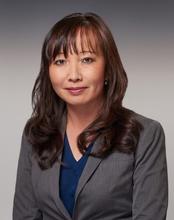
“As a first-generation college graduate, George Mason opened career opportunities in behavioral health care that I could not have otherwise achieved. I learned how to help underserved populations from dedicated professors and excellent internships.”
Yoshie Davison, MSW '09
mental health advocacy leader
Creating Opportunity
We create pathways of opportunity by connecting students with hands-on experiences and career-building jobs that open doors to advancement and life-long achievement.
George Mason University is

“I have gained the confidence to use my story, experiences, and professional knowledge to guide others in doing the same, and George Mason built that foundation for me.”
Cordelia Cranshaw Skeete, BSW '14
Acts of Random Kindness founder,
inspired by her foster care journey
Powering Outcomes
This potential meets opportunity and creates amazing outcomes. College alumni include college presidents, elected officials, senior hospital administrators, entrepreneurs, and global health change-makers.
George Mason graduates start their careers earning $8,000 more than peers from other R1 institutions
2023 National Association of Colleges and Employers
81% Positive career outcomes among college undergraduate and graduate students
2024 George Mason University Career Plans Survey
“As a financially strapped new immigrant, it was amazing to have the opportunity to transfer my credits from a community college to George Mason. My successful experience as a student, despite being the first in my family to go to college, gave me the confidence to take on any challenge.”

Elma Levy, BSN '91
Dovel Technologies
Co-founder
“As a full-time PhD student with a young family, a full-time job, and a long commute, I faced a lot of challenges. The faculty and staff were incredibly supportive—whether it was helping me find funding, a tutor, or just being flexible with deadlines. I’ve earned four degrees, and my time at George Mason stands out as my most positive.”

Gina S. Brown, PhD, Nursing '99
First female president of Oakwood University